Hunter Lovins Sees Business Benefits of Climate Change Adaptation
<p>Hunter Lovins, author of <em>Climate Capitalism</em>, talks about the business opportunities presented by adaptation to climate change.</p>

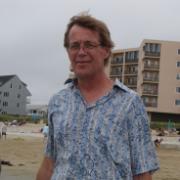
Hunter Lovins image CC-licensed by Joi/Flickr
Among the speakers at the BaseCamp SRI conference held last week in New York was Hunter Lovins, the president and founder of Natural Capitalism Solutions (NCS), an environmental advocacy and consulting organization. Lovins is also the author of Natural Capitalism and the recently published sequel, Climate Capitalism.
Lovins set aside sometime during the conference to talk, often humorously and always in great detail, with SocialFunds.com about the new book, the work of NCS, and the business opportunities waiting to be seized in response to the challenges presented by climate change.
"Climate Capitalism argues that even if you're a profit-maximizing capitalist who believes climate change is a hoax, you'll do exactly what you'd do if you were scared to death about climate change, because we know how to solve it at a profit," Lovins said. "You don't have to believe in the problem to believe in the solution. There are opportunities to make more money while solving the problem."
Of course, Lovins continued, "Climate change is real, is proximate, and is very serious. But it's only one of an array of problems facing capitalism as we know it, from peak oil to water to half the world's population living on less than $2.50 a day."
However, "U.S. legislators are intent upon denying that climate change exists and believing that it would be better to let our green tech jobs go to China," she said. "A number of countries are investing heavily in the green economy, or what the Chinese call the circular economy."
Germany is one country investing heavily in renewable energy technologies, in its case solar power. By the end of 2010, Germany had an installed solar capacity of over 17,000 MW, by far the most in the world. In May of this year, Germany announced that it would phase out all 17 of its nuclear power plants by 2022 and will rely on renewables instead.
"The German solar industry now has more jobs than the American steel industry," Lovins said. "How did the Germans get there? They have good policy, i.e. feed-in tariffs. A study by Deutsche Bank found that while electricity rates have gone up, they went up less than if the Germans did nothing." Feed-in tariffs are guarantees of payment at premium rates for electricity from renewable sources that is fed into the grid.
"If we want out of the recession, we know how to do it," Lovins said. "Those wild-eyed environmentalists over at Goldman Sachs have shown that companies that are leaders in environmental, social, and governance (ESG) policy have 25 percent higher stock value. The Economist Intelligence Unit has shown that ESG leaders have the fastest-growing stock value."
"We're already at the point where companies making an authentic commitment are driving their markets, gaining market share, and increasing labor productivity," Lovins continued. "All aspects of the integrated bottom line."
The first step toward a low-carbon economy is mitigation through energy efficiency measures, which Lovins described as "low-hanging fruit that grows back." Energy efficiency not only reduces reliance of fossil fuels, but also results in significant cost savings within a short period of time. A 2009 report [PDF] by McKinsey & Company, for example, projected that a comprehensive national approach to energy efficiency would lead to energy savings of $1.2 trillion by 2020, and reduce greenhouse gas (GHG) emissions by 1.1 gigatons per year.
"However much we'd like to think we can mitigate our way out of the climate crisis, it's a little too late," Lovins cautioned. "We're going to have to start adapting. The extreme weather events we've been seeing are exactly what climate scientists say to expect in an era of a warming earth."
"It will take the business community waking up and realizing that it is a competitive issue, an issue of the long-term share performance of companies," she said, "And the investment community realizing that if they put their money into the companies of the future, they'll do very well. Their money is at risk if they persist in putting it into companies that don't get it."
"It's going to take local action," she continued. "Policy is dead at the national level, it's probably dead at most state levels. It's almost like these people are intent upon creating another collapse."
"It is the diligent effort in how you transform how you do business that is taken seriously in the marketplace" and among key stakeholders, Lovins said, referring to her experience advising L'Oreal, the cosmetics company. Noting that the company practices energy efficiency, and even has a facility in Canada with a net zero carbon footprint, Lovins advised L'Oreal to "consider telling your very good story of authentic commitment to behaving in a sustainable way. This is what the young people of today want," she said, referring to studies that show sustainability issues to be important considerations for college graduates entering the workforce.
"Companies should have solid relationships with third-party verifiers and non-governmental organizations (NGOs) who will criticize them when they do something wrong," Lovins said. "Follow Global Reporting Initiative (GRI) protocols. Companies that are not GRI-compliant are putting themselves at risk."
While a majority of large companies seems to now understand the importance of sustainability reporting — the 2010 S&P 500 Report [PDF] of the Carbon Disclosure Project (CDP) found that 59 percent of companies in the index report on GHG emissions — smaller companies lag far behind, according to a report [PDF] published earlier this year by Pax World Management.
Lovins noted that a service provided by NCS "is aimed at small businesses, to help them implement sustainable procedures profitably." Referring to a taco maker in California who wanted to sell his product to Wal-Mart, Lovins observed that the first two questions Wal-Mart asks of its suppliers address reporting of GHG emissions and issuing a sustainability report. The Solutions @ the State of Business product offered by NCS, Lovins said, helped the taco maker save $450,000 through efficiency measures.
"The economy is clearly in trouble," Lovins said. "Is the economy going to go over a cliff again? It would not surprise me. Investors ought to be taking this very seriously." She praised the sustainable investment community for having "a disproportionate influence on the economy as a whole."
Hunter Lovins image CC-licensed by Joi/Flickr